New Relic
- Role
- Senior Product Designer
- Team
- Kubernetes product team — PM, engineering, cross-functional stakeholders
- Impact
- Improved time-to-resolution across 3,700 active accounts. Contributed to a 4,000-account upsell pipeline.
New Relic is a leading observability platform used by over 16,000 companies to help engineering teams understand, troubleshoot, and optimize their systems with real-time data.
Kubernetes Application Monitoring
On the Kubernetes team, I focused on making complex telemetry understandable and actionable for both DevOps and developers. Kubernetes orchestrates containerized applications automatically, but until recently, engineers had to stitch together data from many places.
The problem we were solving
Engineers using Kubernetes were context-switching constantly, pulling metrics from one place, logs from another, alert state from a third. There was no unified surface that correlated resource health with workload-level events. In research sessions with DevOps engineers and developers, I found that teams were losing significant time during incident triage because the data existed in New Relic but wasn't connected in a way that matched their mental model of a cluster.
That framing shaped the entire design direction: the goal wasn't a better dashboard, it was a shorter path from "something's wrong" to "I know what to fix."
Design decisions
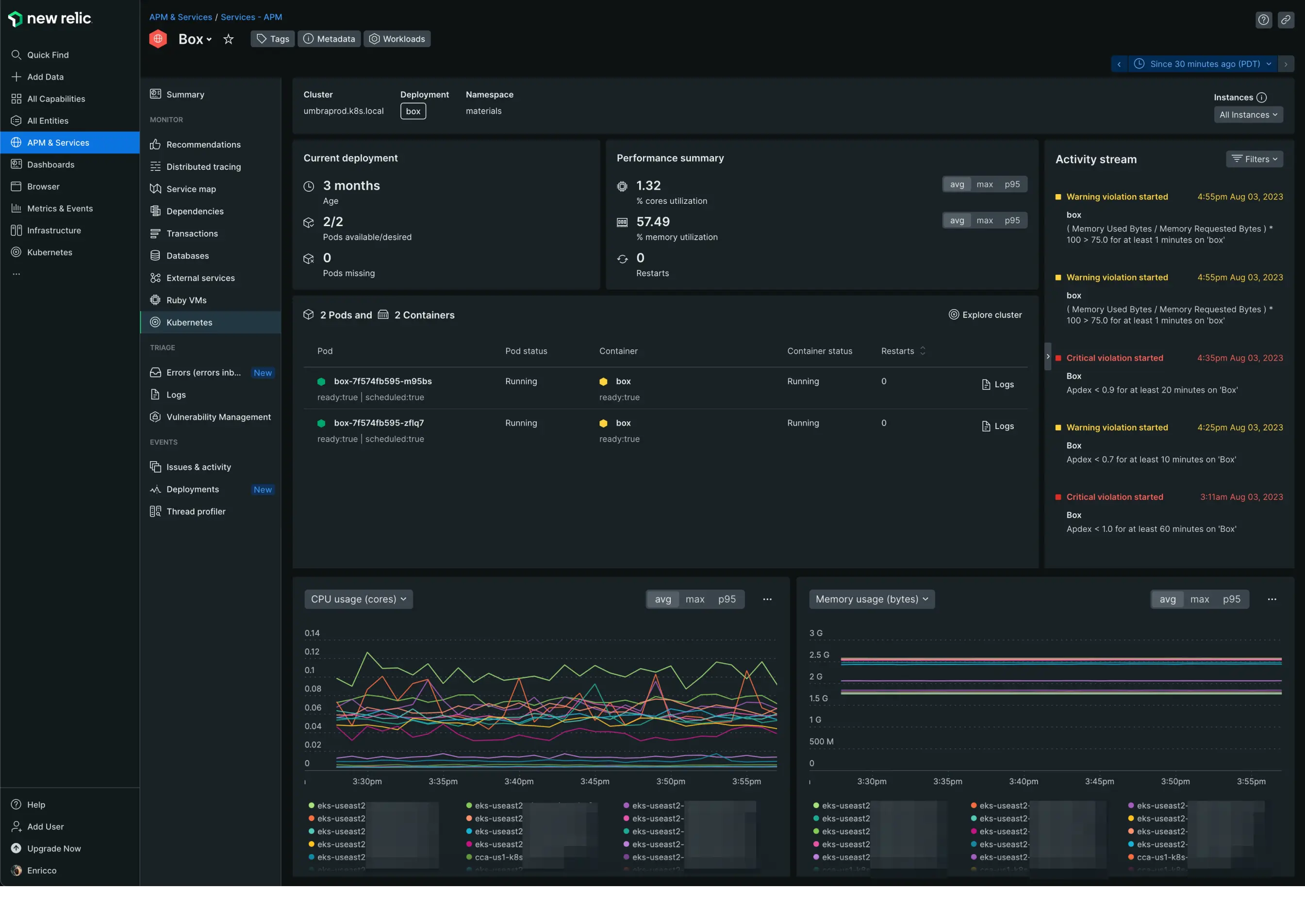
- Unified telemetry table: resource utilization and system health at a glance, replacing the need to navigate between separate monitors.
- Alert sidebar: surfaced critical Kubernetes events inline, so engineers didn't lose context switching to the alerts UI.
- Log overlay: contextual logs tied directly to the specific workload being inspected, not a separate log query.
- Performance charts: high-density visualizations designed to show anomaly patterns without requiring manual correlation.
What changed?
That integration contributed to increased data ingestion across a 4,000-account upsell pipeline, a signal that better visibility drove deeper platform adoption, not just usability improvement.
Kubernetes Explorer
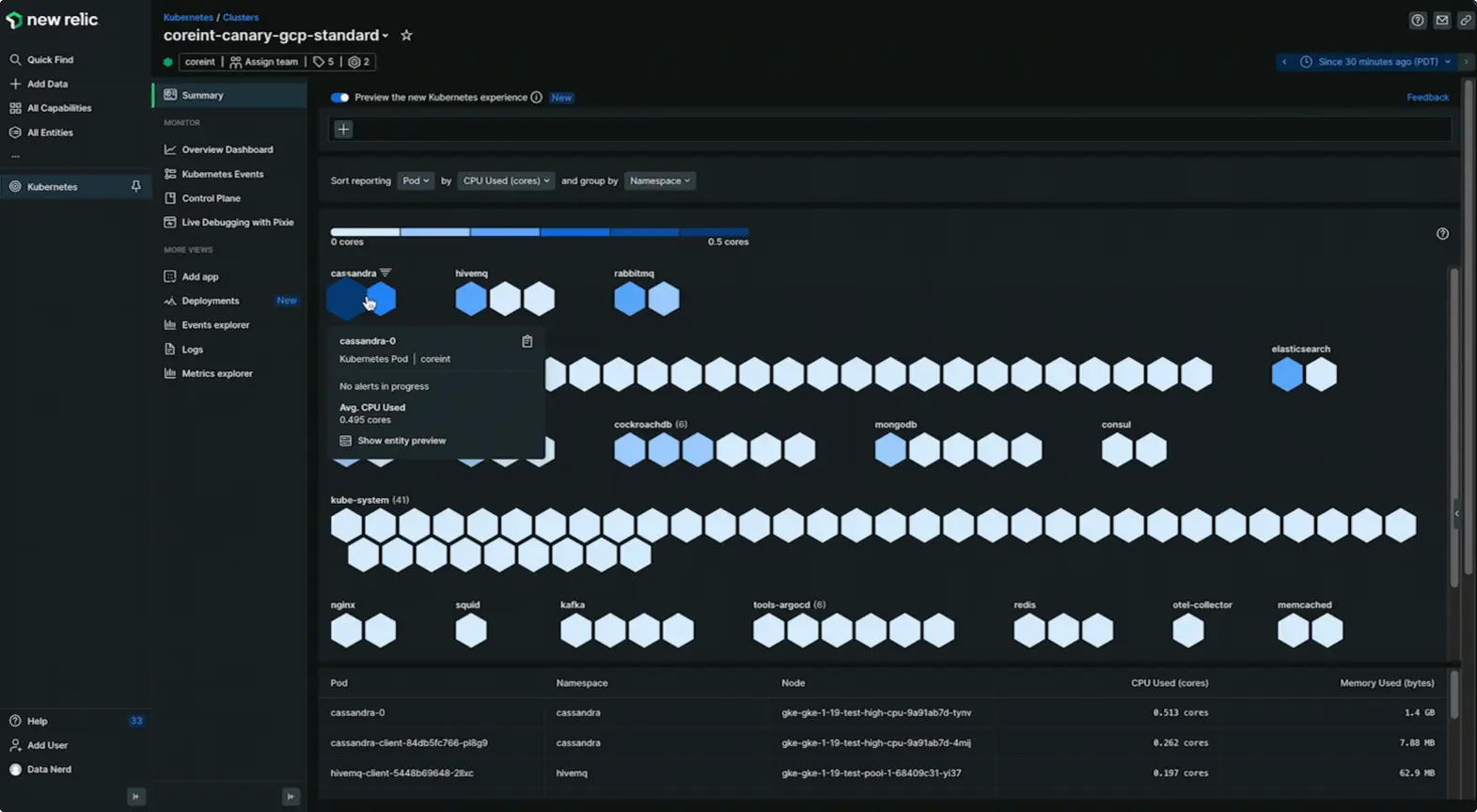
The honeycomb layout wasn't just a visual choice, it solved a specific density problem. Kubernetes clusters can contain dozens to hundreds of entities. A list or card grid breaks down at that scale. The hexagonal layout let us pack entities into a scannable spatial grid where health state was immediately visible without needing to read labels.
I drove a parallel iconography redesign to visually differentiate resource types, reducing cognitive load when scanning large clusters and improving recognition across every surface where those resources appeared.
What changed?
Kubernetes monitoring redesign shipped to 3,700 active accounts, with time-to-resolution as the core success metric
Navigation and Brand revamping
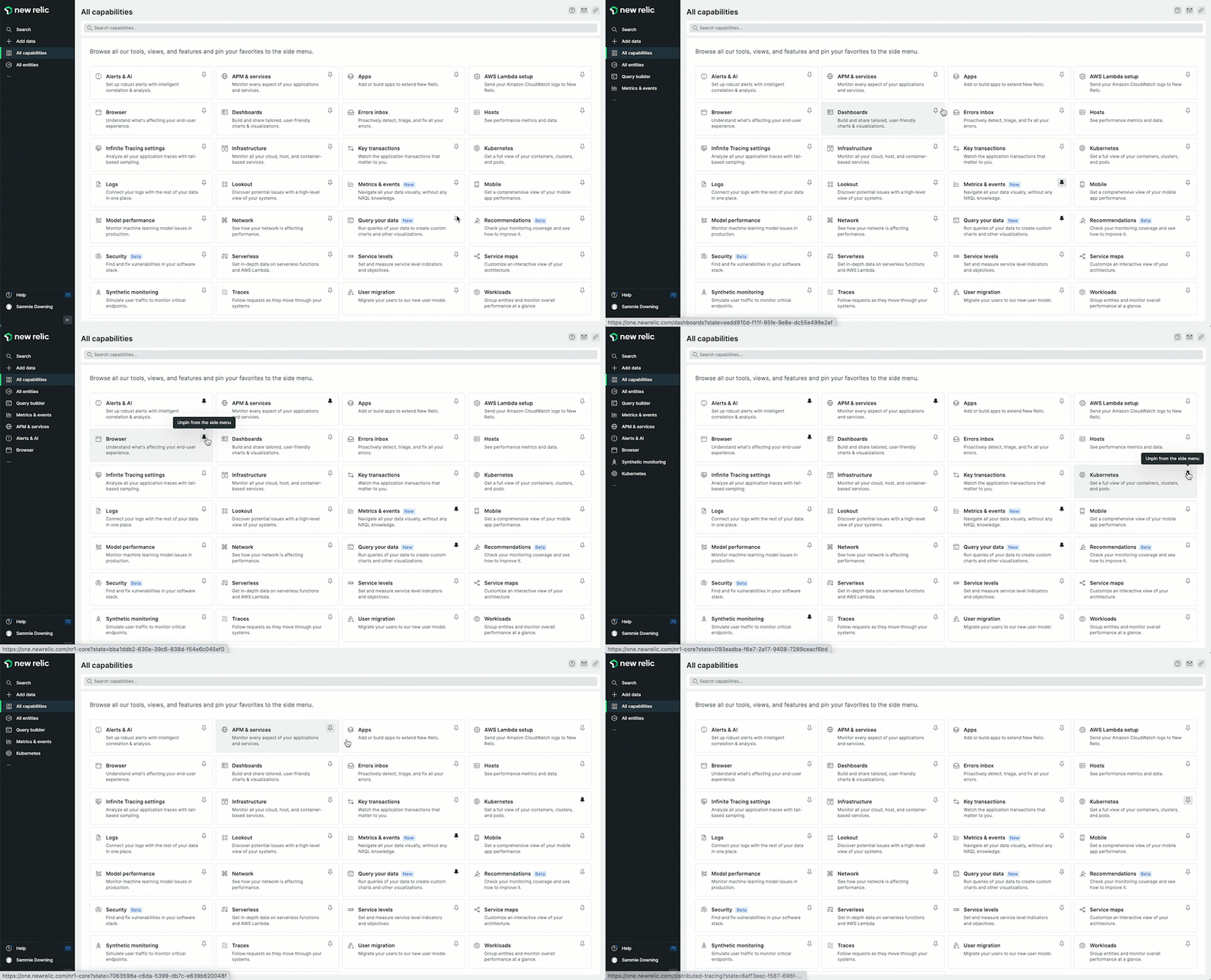
The navigation redesign had to serve radically different user profiles (SREs, developers, DevOps engineers, and business stakeholders) each with a different mental model of what New Relic contains. The core challenge was building a structure scalable enough to surface all products without reinforcing verticals.
I contributed from the ground up, initial research, early concepts, and interactive prototypes. The project was delivered in parallel with New Relic's company-wide rebrand, which introduced an additional layer of complexity. Ensuring a cohesive experience required continuous collaboration and alignment across product teams, brand, and the design system team.
The final solution needed to be intuitive for new users, efficient for experienced practitioners, and flexible enough to support role-based customization, allowing users to tailor their workspace to their specific workflows and responsibilities.
What changed?
Navigation and brand overhaul delivered a 20% reduction in time-to-task, with my ownership covering the tables pattern across 60+ audited screens
Figma Standards
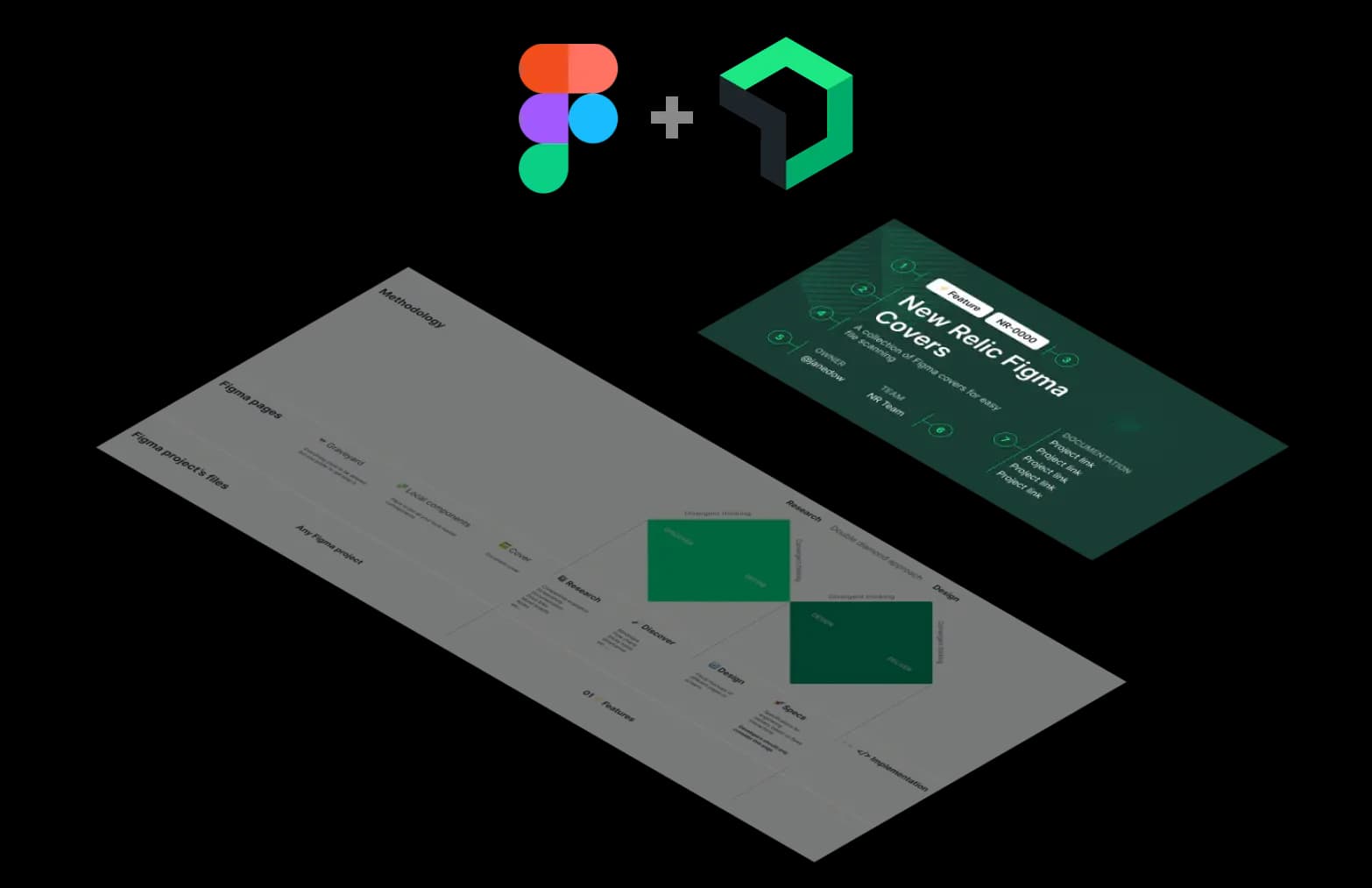
To improve cross-team collaboration, I helped define robust Figma standards and workflows that made it easy for designers, researchers, and stakeholders to align.
I also built an automation using the Figma API to export structured design metadata as JSON, enabling tools like JIRA to surface real-time project status without requiring direct access to Figma.
What changed?
The introduction of standardized Figma workflows reduced file discovery time by 50% and increased design consistency across teams. It also improved cross-functional collaboration by making components, libraries, and resources easier to find, share, and reuse.